










The report is finally out.
Every two years, the Texas Maternal Mortality and Morbidity Review Committee (MMMRC) publishes the state’s maternal health data and policy recommendations. It is traditionally released on September 1.
Not this year. Texas delayed the release of the maternal death report until after the midterm elections—citing a statutory provision that sets December 1 as the latest possible date, not a required one. They did the same thing before the 2022 midterms, too.
We see the pattern. And now that the report is out, we can see what the delay was meant to keep from public view.
The Maternal Mortality and Morbidity Review Committee reviews cases of maternal death and severe complications across Texas, determines which deaths were pregnancy-related and which could have been prevented, and issues recommendations to the Legislature.
It is supposed to be a technical, nonpartisan body. But the Committee has been deeply politicized and forced into inaction under outgoing Texas Governor Greg Abbott. This year, the Committee also skipped case review for 2022 and 2023 entirely—the first two years after Texas’s total abortion ban took effect. That means the deaths that occurred in those years, including those of Nevaeh Crain, Josseli Barnica, Tierra Walker, and Porsha Ngumezi, are excluded from review.
February 2026 — Houston: “It’s a Matter of Life or Death”
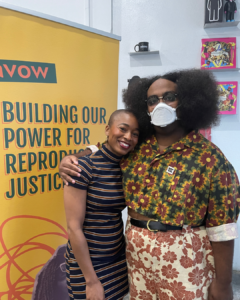
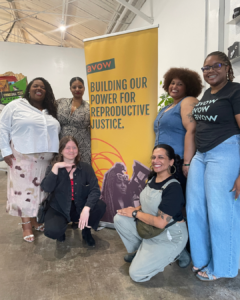
Avow convened birth workers, organizers, and community members at The Reading Room in Houston to address Harris County’s Black maternal health crisis, in light of a study naming Houston the deadliest major U.S. city for Black people to give birth. The event, hosted in partnership with Scalawag Magazine, If/When/How, Full Circle Family Services, upEND Movement, WeGotUs, and Sankofa Mama, made clear that birth and abortion are not separate issues—and that Black communities have already created the blueprint for the solutions.
April 2026 – Shaping Sunset Review for the MMMRC
In collaboration with partners like Texas Civil Rights Project, URGE: Unite for Reproductive & Gender Equity, and the Texas Abortion Advocacy Network, Avow Texas and its supporters took action to shape the sunset review process for the MMMRC. In a state as populous and diverse as Texas, it is essential that our state’s leadership treats maternal health as a governance priority. This means resourcing the Committee to complete the full scope of its mandate – to report on maternal deaths and morbidity in our state, and make recommendations to state and local legislators to prevent deaths in the future.
August 2026 — Reproductive Justice As A Campaign Priority
This past election cycle, candidates across the state championed winning platforms to address issues related to maternal mortality like affordability, access to healthcare, medicaid expansion, and ending abortion bans that keep clinicians too afraid to provide care. These campaigns highlighted the importance of Avow’s strategy to make sure decision-makers treat maternal health as a legislative obligation, rather than a public health crisis suppressed by misinformation and stigma.
September 2026 — Solidarity with Tierra Walker’s Family and Demanding the Timely Release of the MMMRC’s Latest Report
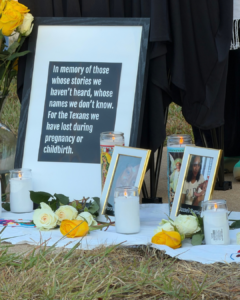
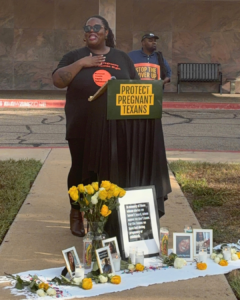
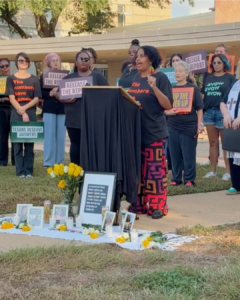
When Texas made it clear that it intended to delay the latest MMMRC report past the midterms—denying voters essential information as they headed to the polls—Avow joined birth justice advocates and the Texas Women’s Health Caucus for a press conference and “People’s Hearing.” Community members shared testimony and urged the immediate release of a report that captures the full picture of Texas’s maternal health crisis, including data from 2022–2024.
That same week, Amplify Legal—the legal arm of Abortion in America—filed a lawsuit on behalf of Tierra Walker’s family. Walker, a 37-year-old San Antonio mother, died in December 2024 at 20 weeks pregnant after developing preeclampsia. She asked for an abortion and was denied.
"Tierra Walker's death is a direct result of Texas' abortion ban. Walker died after being ignored by over 90 doctors who refused to intervene and save her life amid a state-manufactured public health and Black maternal health crisis caused by Texas' abortion bans."
— raven e. freeborn (they/them), Chief Executive Officer of Avow Texas
The state delayed a report that would have documented what families like Tierra’s already know—and chose not to review the 2022 and 2023 deaths in which Tierra Walker’s case sits.
Avow has reviewed all 56 pages, and our breakdown is available now. It covers what the report documents, what it refuses to name, and what its omissions mean for the families still waiting on the state to account for their losses. We are also using the report’s findings to shape our strategy for the 90th Legislative Session.
Texas could soon criminalize all abortion. But together, we still have the power to take back our futures. Right now, Avow canvassers are working in the field and talking to voters about what abortion access means to our communities.
When we win back abortion rights at the state level, no out-of-touch, extreme judge will ever have the power to take it away again. Rush a donation and commit to restoring abortion access in Texas.
If you’ve saved your payment information with ActBlue Express, your donation will go through immediately:
Texas is the front line — but with you, we’re building the blueprint for reproductive justice. Become a Bluebonnet monthly donor and help restore abortion access, fight back against extremism, and build long-term power to win for good.

If you’ve saved your payment information with ActBlue Express, your monthly recurring donation will go through immediately:
SB 8 bans abortion as early as 6 weeks and puts a $10,000 bounty on anyone who helps someone get abortion care. Now more than ever, we need unapologetic abortion rights advocates to lay the groundwork to defeat anti-abortion lawmakers.
Chip in to organize Texans to restore abortion access in our state. The organizing we do today determines the gains we make in 2022.
If you’ve saved your payment information with ActBlue Express, your donation will go through immediately:
NARAL Pro-Choice Texas is now Avow!
To avow means to declare openly, bluntly, and without shame. Now more than ever, our state needs bold and unapologetic advocacy for abortion rights.
As an independent, Texas-based organization, Avow will continue our work at the state and local level — where the decisions that most impact Texans are happening.
Together, we can build a Texas where every person is trusted, thriving, and free to pursue the life they want.
Learn more about our new name, inspired by bold and unapologetic abortion advocates like you!